
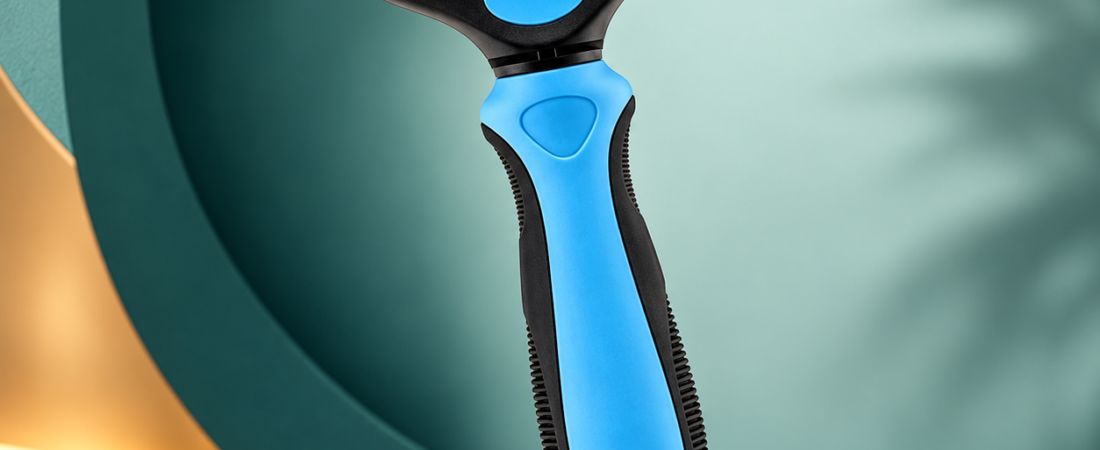
Bernese Mountain Dogs · Brush guide
Best Brush for a Bernese Mountain Dog + the Comb Test for Ear Mats
Quick answer: a Bernese needs three tools, not one. Use a slicker or pin brush for everyday work and an undercoat rake in shedding season. Finish with a metal comb to find hidden tangles.
The AKC says brush weekly, and daily during shedding season. Check behind the ears and the pants every time.
You brushed your Berner on Sunday. By Tuesday, black tumbleweeds are rolling across the kitchen again.
Then your hand finds a hard little knot behind one soft ear.
A Berner coat looks smooth on top while loose undercoat packs down underneath. The fix is the right tools in the right order.
Who this is for: Berner owners who want a home brushing kit that keeps up with the coat.
What is the best brush for a Bernese Mountain Dog?
A slicker or pin brush for everyday work, an undercoat rake for loose undercoat, and a metal comb to check.
The AKC describes the Berner coat as a longer outer coat over a wooly undercoat. It says tangles “can be worked out with a slicker brush or metal comb.”
The national breed club lists a pin brush and a metal comb. It adds “a shedding blade or mat rake for removing dead undercoat.”
| Tool | Its job | When to use it |
|---|---|---|
| Long-pin slicker brush | Opens the coat and works out small tangles. Long pins reach into a dense coat. | Every session, first, in small sections. |
| Steel pin brush | Everyday brushing of the long outer coat. | Weekly upkeep. One Berner handler prefers pins without ball heads. |
| Undercoat rake | Lifts loose undercoat that sits under the outer coat. | Shedding season, or when the coat feels packed and heavy. |
| Greyhound (metal) comb | Finds the tangles a brush glided over. | Last, through ears, chest, armpits, pants and tail. |
Which slicker? Artero’s breed guide calls for a “long-bristle slicker brush” with a comb. Pick long pins for this coat.
Slicker or pin brush? Many owners keep both. The slicker does detail work, and the pin brush handles the long body coat.
Self-cleaning slicker? Berner handler Anna Boesch skips them. She says a steel comb clears hair from a slicker easily.
Not sure your dog’s coat is typical? Our free dog coat quiz helps you match tools to the coat.
Free printable
Know when your Berner’s next big shed is likely to hit
Get the free Double-Coat Shedding Calendar. It includes a 10-minute weekly routine and clear signs that mean a vet visit, not more brushing.
We email once or twice a month about coat care. Unsubscribe anytime.
How often should I brush my Bernese Mountain Dog?
At least weekly, and daily during shedding season. That is the AKC’s advice for the breed.
Shedding season comes twice a year, according to the AKC. VCA puts these heavy sheds in late spring and late fall.
Between full sessions, do a quick daily check. VCA vets advise checking for tangles under the armpits, in the groin and behind the ears.
How do I brush a Bernese Mountain Dog?
Work in sections on a dry coat. Brush first, rake second, then comb. Never drag any tool through a tight mat.
- Start dryBrush before any bath. VCA warns tangles can become impossible to remove after bathing.
- Line brushPart the coat with one hand. Brush small sections with the slicker or pin brush, down to the skin.
- Rake if sheddingUse the rake with light strokes in the direction of growth. Stop at any snag.
- Comb testRun a metal comb through each section. If it snags, you found a tangle the brush missed.
- Tender zones lastEars, chest, armpits, belly, pants and tail base get extra care and smaller strokes.
- End calmPraise, a treat and a break. The breed club says grooming needs patience, gentle hands and praise.
Drying after a bath or rain
Dry the coat fully, down to the skin, before you brush or rake. Towel off first.
Some owners then let the coat air dry. The breed club notes some dogs get hot spots if coats stay damp for long periods.
Some owners use a high-velocity, forced-air dog dryer. The club warns many dogs fear its noise at first, so start on low speed.
Skip human hair dryers. The club says they run much hotter and could burn skin.
Dry, dusty coat? Artero suggests a spray conditioner. The breed club notes some owners lightly mist with water first.
Dog hates the slicker? Keep sessions short, and end on praise and a treat.
Start young if you can. The breed club calls teaching a puppy to accept grooming “an essential part of early training.”
Where do Berners mat, and what do I do about ear and pants mats?
Behind the ears, in the armpits and along the back of the legs. Small tangles can be brushed out gently. Tight mats need a groomer.
VCA names the ears, armpits and back of the legs as mat zones for long coats. On a Berner, the back-of-leg hair is the “pants.”
VCA lists the ears first. Use small strokes there, and hold the ear flat in your palm.
For a near-mat, a rake can help. Boesch says hers will “separate those near-mats” she would not drag a comb through.
A tight mat close to the skin is different. Do not pull it, cut it with scissors or force a dematting tool through it.
VCA says only clippers should be used to remove mats, never scissors. It strongly recommends a groomer or vet for severe tangles.
How long does brushing a Bernese take?
There is no set time. A big dog with a thick coat takes longer, so split the job into zones instead of one marathon.
A Berner can weigh over 100 pounds.
Owners in Berner forums describe anything from a quick 10-minute tidy to a bath day of hours. That is owner talk, not a rule.
Try this instead. Do the body one day, then ears and chest the next. Do pants and tail on the third day.
The breed club says dogs, especially puppies and older dogs, “need frequent breaks.” Let your Berner lie down when tired.
Is an undercoat rake safe for a Bernese Mountain Dog?
Generally yes, used gently on loose undercoat. Stop if your dog flinches or moves away. If unsure, ask a qualified groomer.
Grooming tool maker Artero says rakes and shedding blades “help remove the undercoat without damaging the protective layer.”
Coat condition matters more than breed alone. A Berner with a packed, heavy coat suits a rake. A freshly brushed coat may need very little raking.
Go gentler on the belly, armpits and behind the ears. Those spots are sensitive.
Want the full rake technique? Read our undercoat rake guide.
Should I shave my Bernese in the summer?
Usually no. The breed club says no trimming is needed beyond feet and ears, and undue trimming is discouraged.
The breed club quotes the AKC standard. A Berner “is shown in natural coat and undue trimming is to be discouraged.”
Artero’s breed guide goes further. It says “you cannot clip this type of coat,” and suggests brushing plus light scissoring instead.
VCA warns of a rare problem after clipping, mostly seen in plush coats, called post-clipping alopecia. Hair regrowth can be delayed for up to two years.
Hot dog? Talk to your vet or groomer before you clip anything.
When should I take my Bernese to a groomer?
For tight mats near the skin, or when the shed outpaces you. Artero suggests a regular professional groom.
Artero suggests a professional groom every 8 to 12 weeks, depending on how much the dog sheds. It says visits help most around spring and autumn.
Book sooner if you find mats you cannot brush out, or if your dog fights the rake.
What should you avoid when brushing a Berner?
Skip surface-only brushing, bathing before brushing, forcing tools through mats and shaving for shedding.
- Brushing only the top. The outer coat can look neat while undercoat packs underneath.
- Bathing a tangled coat. Brush and comb first. Tangles tighten when wet.
- Forcing the rake. If any tool catches hard, stop and go back to the brush.
- Scissors on mats. VCA says clippers only. A groomer is safer still.
- Leftover shampoo. Rinse fully. The breed club says residue can cause hot spots.
People also ask
What brushes does a Bernese puppy need?
The same kit, used gently and briefly. Short, happy sessions teach a puppy that handling is normal before the adult coat comes in.
Can I use a FURminator-style deshedding tool on a Berner?
Some owners do. We compare bladed deshedders and rakes in our undercoat rake vs FURminator guide. Follow the maker’s coat guidance either way.
How often should I bathe a Bernese?
The breed club says it depends on how dirty or doggy-smelling your dog gets. Artero suggests a monthly bath. Too much bathing causes problems too, the club warns.

Michael Northcutt, PhD
Certified Pet Therapy Specialist · Certified Companion Animal Rehabilitation Therapist (CCAT) · AAPT Certification Board Member
Michael has 14 years in animal-assisted care, companion-animal rehabilitation and welfare-centered handling. He writes for owners who want clearer decisions and easier daily routines. His focus is animal comfort and honest product limits. He is not a veterinarian.
Sources
- American Kennel Club. Bernese Mountain Dog breed page, Grooming section and sizes
- Bernese Mountain Dog Club of America. BMDCA Info Series 2009 #13: Bernese Mountain Dogs and Grooming/Hygiene, hosted by BMDC of Northern California
- VCA Animal Hospitals, Barnes, Llera, Hunter and Yuill, DVMs. Grooming and Coat Care for Your Dog
- Artero (grooming tool maker). Care for Bernese Mountain Dogs: brushing, bathing and haircuts
- BernerWise, Eileen Blass, with Anna Boesch. 5 must-have grooming tools every Berner owner needs
Owner time ranges come from public forum posts and are not research. This guide has not been reviewed by a veterinarian.