
Separation anxiety · Toys
Dog Toys for Separation Anxiety: Which Help, and What an Untouched Toy Tells You
Quick answer: long-lasting food toys can make goodbyes easier for bored or mildly worried dogs. No toy treats separation anxiety.
If your dog ignores a favorite food toy once you leave, take that seriously. Film it and talk to your vet.
Heads up: we sell the Vet Prep Pack mentioned here.
You stuffed the toy. You froze it overnight. You set it down, grabbed your keys and slipped out.
Then you came home to the same toy, still full, sitting by the door. Maybe the door frame had new scratches.
That untouched toy is not a failure. It is one of the most useful clues you will get about your dog.
If you feel guilty, you are in good company. Most of us have to leave our dogs sometimes.
Who this is for: owners shopping for calming toys because their dog struggles when left alone.
It helps most if you are not sure yet whether your dog is bored or truly distressed.
Our pick: for the absence itself, a durable Kong-style treat-dispensing toy. For the goodbye and hello, a snuffle mat or lick mat, used with you there.
What are the best toys for dogs with separation anxiety?
Food toys that take time: a Kong-style stuffed rubber toy, a lick mat, a snuffle mat or a long-lasting chew. Each gives your dog a job.
The ASPCA explains why. Puzzle toys and chew items encourage chewing and licking, which have been shown to have a calming effect on dogs.
Many “calming toys” and “dog anxiety toys” for sale fit one of the types below. The catch is which ones are safe while you are out.
| Toy type | Its job | Best time | Safe alone? |
|---|---|---|---|
| Kong-style stuffed rubber toy | A treat-dispensing lick and chew. Stuff it with softened kibble and a little wet food, plain pumpkin or xylitol-free peanut butter. | As you leave, if your dog eats it happily when you’re home too. | The type the ASPCA and RSPCA suggest for departures. Pick one too big to swallow. |
| Lick mat | Slow, steady licking of a thin spread. | The last minutes before you go, or your first minutes back. | No. Silicone can be chewed and swallowed. |
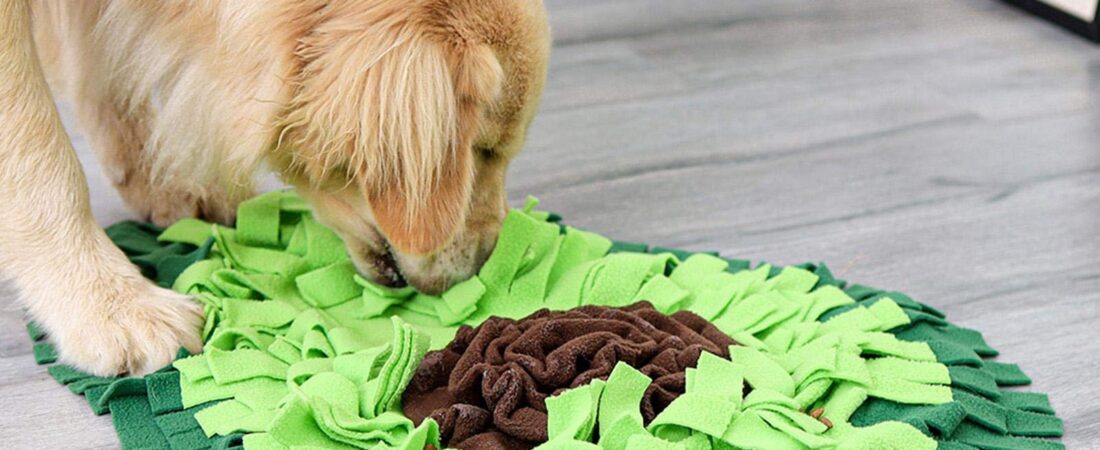
| Snuffle mat | Sniffing out kibble hidden in fleece strips. Also a slow feeder. | Before you leave or when you get home. | No. Fleece strips can be pulled loose and swallowed. |
| Puzzle feeder | An interactive puzzle: your dog moves parts to reach kibble. | With you home, until your dog knows the puzzle well. | Safer with you home. Rover advises supervising puzzles with removable pieces. |
| Long-lasting chew | Chewing, which dogs can use to self-soothe. | Any calm moment. Watch the first few sessions. | Only once you know how your dog chews it. No chew is fully risk free. |
| Heartbeat plush toy | Warmth and a pulse that may soothe young puppies. | Rest time, with you nearby. | No. Anxious and young dogs may chew it. Stuffing and the heartbeat part can be swallowed. |
| Pet camera | Not a toy. It shows you what really happens while you’re out. | Any absence you want to check. | Yes, set out of reach. Use it to watch, not to talk. |
We read 120 one- and two-star reviews of best-selling snuffle mats and lick mats. Of the 60 fleece snuffle mat reviews, 29 were about chewing or tearing.
So if your dog shreds toys, these mats may not suit them at all. A sturdy rubber toy is the safer start.
Power chewers need the tougher versions. Rover notes the classic Kong suits moderate chewers. Aggressive chewers need the extra-durable version.
Do toys actually help separation anxiety?
For mild cases, a food toy can help your dog link being alone with something good. For real panic, a toy is not enough.
The ASPCA calls this counterconditioning. Every time you leave, your dog gets a special food toy that only appears when they are alone.
Test it a few times with you home first, then save it for departures.
Remove it as soon as you get home. That keeps it special, and tied to your absences.
Keep that special alone-time toy separate from mats. Mats are an everyday job you share, not the departure toy.
It only works for mild cases, the ASPCA says. Highly anxious dogs usually won’t eat when their guardians aren’t home.
The VCA guide agrees. It is by Debra Horwitz and Gary Landsberg, both board-certified veterinary behaviorists.
They write that food is not likely to be useful in dogs that are too anxious. So a toy is a helper, not a treatment.
Our rough guide to where your dog sits, with the ASPCA’s advice for each level:
- Mild: eats the toy, then settles. A special food toy at each departure may be enough.
- Moderate: some distress even with the toy. See your vet, then gradual desensitization with a qualified professional.
- Severe: won’t eat, panics or tries to escape. See your vet. Some dogs need medication before training can start.
A useful next step
Check the food before you fill the mat
Our free food checker gives separate dog and cat answers, preparation cautions and source links. Results appear without an email address.
Is it boredom or separation anxiety?
A bored dog usually doesn’t look anxious. A distressed dog shows distress soon after you leave, and may ignore food.
That line on boredom comes from the ASPCA. Bored dogs are looking for something to do, so a good toy may help.
Distress looks different. The RSPCA lists these common signs of separation-related behaviour:
- Chewing or destroying things, often near doors or windows.
- Howling, barking or whining.
- Weeing or pooing indoors.
- Signs of anxiety before you leave, and excessive excitement when you return.
- Trembling, panting, drooling, pacing or vomiting.
- Not eating meals, treats or food toys while you are out.
The RSPCA says these behaviours start before you leave or within a few to 30 minutes after.
The toy test: the RSPCA suggests a special toy for when you go out. First, check your dog enjoys it with you home.
If they ignore it once you are out, the RSPCA says this may be a sign your dog is worried.
How do you run the toy test?
Film one normal absence. VCA calls a video or audio clip of your dog alone perhaps the best way to check.
No pet camera? Prop up an old phone or laptop out of reach, plugged in, and start a video call to yourself. Mute your end so your dog hears nothing.
- Pick a normal tripFilm an errand you were making anyway, ideally 30 to 40 minutes. Never stay out longer just to see.
- Try the toy at home firstMake sure your dog loves it with you there. Otherwise an ignored toy tells you nothing.
- Start recording earlySome dogs get anxious while you get ready. Hit record before you pick up your keys.
- Hand it over calmlyGive the toy as you head out. Keep the goodbye short and quiet.
- Watch the first 40 minutesMost anxious responses happen then, per the ASPCA. Note whether your dog eats, and when.
- Come back if it looks unsafeFrantic digging at the door or chewing exits means stop filming and go home.
When you replay it, jot down three things. Did your dog eat? When did any barking or pacing start? How fast did they settle when you came back?
Our view: ate the toy and settled? Enrichment and a calm routine may be enough. Ignored it and paced? Read the distress section below.
How do you use mats in a goodbye routine?
Use them with your dog in the last few minutes before you leave, and again when you get home. Then put them away.
Mats are a supervised job, not a babysitter. That is where they differ from a sturdy rubber departure toy.
This is our routine:
- About 10 minutes out. Set down a snuffle mat with a small handful of kibble, or a lick mat with a thin spread.
- Keep it easy at first. Leave some kibble on top so a new dog wins quickly.
- Stay close and low-key. Keep your dog in view while they work. Watch for chewing.
- Pick it up. When the food is gone, put the mat away. Then head out calmly.
- First minutes back. Keep it low-key, no fuss. Set down the other mat quietly and let it absorb the excitement.
For the lick mat, plain canned pumpkin, plain yogurt or wet dog food all work. Peanut butter is fine only without xylitol.
Press the lick mat onto smooth tile or glass. Suction cups won’t grip carpet.
If enough is eaten, xylitol can cause life-threatening low blood sugar and liver failure, says Pet Poison Helpline. Check any jar with our free xylitol label checker.
Count the food you use as part of your dog’s daily meals. The RSPCA gives the same tip for food toys, to avoid overfeeding.
Why mats still matter for an anxious dog: the minutes around the door are part of the problem. Mats cover the goodbye and the hello. A Kong-style toy covers the absence, if your dog eats alone.
What if your dog won’t touch the toy while you’re gone?
Treat it as a sign of possible distress. Book your vet first, then ask about a qualified behavior professional.
Health problems can cause or worsen separation-related behaviour, the RSPCA notes. So the vet visit comes first.
For behavior help, the ASPCA suggests a Certified Applied Animal Behaviorist or a board-certified veterinary behaviorist.
If you can’t find one, a Certified Professional Dog Trainer may help. Check they have experience treating fear.
Worried a specialist costs too much? Start with your regular vet. The RSPCA’s route is the same: your vet refers you to a clinical animal behaviourist.
Moderate to severe cases need gradual desensitization and counterconditioning. The ASPCA says that work needs a trained, experienced professional’s guidance.
Medication is a vet decision too. Always ask your vet or a veterinary behaviorist before giving anything.
Ask about pheromone products as well. VCA says pheromone therapy can be useful for diminishing anxiety.
Your clips and notes make that first appointment far more useful. Bring them.
Should you say goodbye to your dog when you leave?
Keep it short and calm. A quick pat and a quiet goodbye is fine. A long, emotional farewell is not.
The ASPCA says a pat on the head, goodbye, and leave. VCA suggests skipping the goodbye and handling departure cues, like keys, out of your dog’s sight.
How can I quickly help my dog with separation anxiety?
Stop leaving your dog alone longer than they can cope. Most dogs with separation anxiety are fine as long as someone is with them, the ASPCA says.
That someone doesn’t have to be you. Options the ASPCA lists include:
- Taking your dog to work, if your job allows it.
- A family member, friend or sitter who stays at your home.
- A sitter’s house or a doggy daycare.
Is it cruel to leave a dog alone all day?
A full day is a lot to ask. The RSPCA recommends leaving a dog alone no more than four hours, and puppies much less.
The same limit answers the overnight question. A whole night alone runs well past four hours.
If your workday is long, a midday walker or sitter shortens the stretch. The RSPCA suggests this too, for company and a walk.
No toy can stretch that limit. A frozen toy lasts minutes, and your absence lasts hours.
What should you avoid?
Don’t leave fabric or silicone toys with an unsupervised dog, don’t punish, and don’t expect any toy to cure distress.
- Mats left alone with your dog. Fleece and silicone are not chew toys.
- Scolding about the mess. Anxious behaviors are distress responses, not spite, the ASPCA says. Punishment can make things much worse.
- Crying it out. Dogs left to cry it out only learn that being alone is terrifying, the RSPCA warns.
- A crate by default. For dogs with separation anxiety, crates can prompt intense escape attempts and serious injuries, VCA cautions. A toy in the crate does not change that.
- Talking through the camera. Dr. Jamie Whittenburg, DVM, told Rover that hearing your voice without you there can unsettle an anxious dog further.
If your dog swallows fabric strips or a piece of silicone, call your vet. Our my pet ate something page helps you gather the facts first.
Common questions
Should I rotate my dog’s toys?
Yes, it can help. Dr. Whittenburg told Rover she recommends switching toys often, so dogs don’t lose interest. Try a few and watch what your dog prefers.
Do heartbeat toys help dogs with separation anxiety?
Mainly for young puppies. Dr. Whittenburg told Rover the heartbeat may soothe puppies away from their mother. She also warns anxious dogs may chew them, so supervise.
Should I leave the TV, radio or calming music on?
It can help some dogs. The RSPCA suggests a radio to muffle outside sounds. VCA suggests music or TV as cues linked to relaxation.
Will a second dog stop separation anxiety?
Rarely. A second pet can occasionally keep a dog occupied, VCA says. It is unlikely to help a dog who is too anxious.
My dog finishes a frozen toy in five minutes. What now?
Pack it tighter and freeze it, as VCA and the ASPCA suggest. Softened kibble with a little wet food packs well.

Michael Northcutt, PhD
Certified Pet Therapy Specialist · Certified Companion Animal Rehabilitation Therapist (CCAT) · AAPT Certification Board Member
Read Michael’s full biography
Certified Pet Therapy Specialist · Certified Companion Animal Rehabilitation Therapist (CCAT) · AAPT Certification Board Member
Michael brings 14 years of experience in animal-assisted care, companion-animal rehabilitation, and welfare-centered handling.
He writes for owners who want clearer decisions and more manageable daily routines. His focus is animal comfort, practical preparation, and honest product limits.
Scope: Michael is not presented as a veterinarian or veterinary behaviorist. This article is not an individual assessment.
Ask your veterinarian about pain, sudden behavior changes, injury, or serious distress. Seek qualified help when safety or handling is uncertain.
Sources
- ASPCA. Separation Anxiety
- RSPCA. Recognising separation-related behaviour and anxiety in dogs
- VCA Animal Hospitals, Debra Horwitz, DVM, DACVB and Gary Landsberg, DVM, DACVB. Separation Anxiety in Dogs
- Rover, Nia Martin, updated by Liz Coleman. The 11 Best Calming Dog Toys for Anxiety, According to Experts
- Pet Poison Helpline. Xylitol
Paw Pampering sells the Separation Distress Evidence and Vet Prep Pack mentioned here. This guide has not been reviewed by a veterinarian.