
Enrichment · Lick mats
Dog Lick Mats: Safe Spreads, Floors They Grip, and the One Rule to Keep
Quick answer: a dog lick mat is a grooved silicone pad. Stick it to tile or glass. Then press in a thin layer of plain pumpkin, plain yogurt or wet dog food.
Stay close, and pick it up when the food is gone. Never leave it with your dog alone.
Heads up: we sell the Vet Prep Pack mentioned here.
You bought the lick mat everyone raves about. You spread it thick, froze it, and set it down.
Your dog cleared it in four minutes. Or flipped it over and dug. Or chewed the corner while you rinsed a mug.
Now you are at the fridge, wondering if yogurt is even safe. This guide covers each of those.
Who this is for: owners who just bought a lick mat, or are about to, and want it used safely.
It fits best if your dog eats fast or gets wound up at goodbyes and hellos.
What is a dog lick mat?
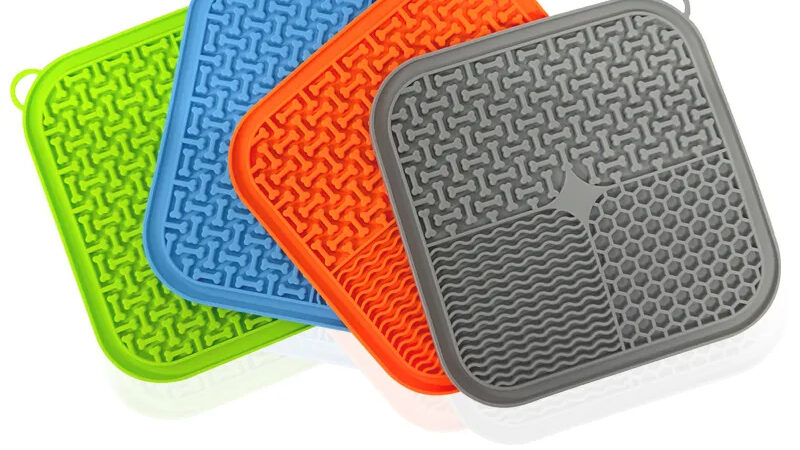
A flat silicone or rubber pad with grooves and bumps. You press soft food into it, and your dog licks it out slowly.
Some people call it a lick pad. It works as an interactive slow feeder, and many have suction cups on the back.
What do you put on a dog lick mat?
Something soft your dog already eats safely. Plain canned pumpkin, plain yogurt, wet dog food or xylitol-free peanut butter all work.
Keep the layer thin and press it into the grooves with a spoon or spatula.
| Spread | Why it works | Watch for |
|---|---|---|
| Wet dog food | It is already part of your dog’s diet, so it is easy to count. | Take that amount out of the next meal. |
| Soaked, mashed kibble | Uses your dog’s usual food. | Soak until soft enough to press in. |
| Plain canned pumpkin | Spreads well and freezes well. | Plain pumpkin only, not pie filling. |
| Plain yogurt or plain Greek yogurt | Many dogs like it, and it thins with a splash of water. | Unsweetened only. Dairy can cause diarrhea or digestive upset, the ASPCA warns. Start small. |
| Low-sodium broth, frozen | The AKC suggests pouring it on the mat, then freezing it. | Check the label for onion and garlic. Keep the mat flat on a tray to freeze. |
| Peanut butter | The classic. Very sticky, so it lasts. | Check the label for xylitol. The AKC says to use it in moderation. |
Peanut butter, before you open the jar. Some peanut butter contains xylitol, which is toxic to dogs, the AKC notes.
Pet Poison Helpline says enough xylitol can cause life-threatening low blood sugar and acute liver failure.
Not sure? Check the label with our free xylitol label checker. If your dog ate some, call your vet or Pet Poison Helpline now.
Never spread these. The World Small Animal Veterinary Association (WSAVA) lists chocolate, macadamia nuts, grapes, raisins and the onion family as toxic.
A useful next step
Check the food before you fill the mat
Our free food checker gives separate dog and cat answers, preparation cautions and source links. Results appear without an email address.
Are lick mats actually good for dogs?
For most dogs, yes, when you use them together. They turn a small amount of food into slow, focused work.
WSAVA says treats can provide enrichment and mental stimulation. A lick mat is simply a slower way to give one.
Be wary of bigger promises. Lick mats get sold as calming toys and for dental health. No mat treats anxiety.
Even the AKC says a lick mat is not a substitute for tooth brushing.
Can you leave a lick mat with your dog?
No. Use it while you are in the room, then pick it up. That is the one rule we never bend.
The AKC puts it bluntly: there is no such thing as a leave-it-and-forget-it dog toy. Lick mats are best used with supervision.
Food-grade means the mat may touch food, the AKC explains. It does not mean it is safe to eat. Never leave one in a crate while you are out.
One owner on a vet Q&A site asked what to do after their dog ate half a mat alone. Stay close, and take the mat up the moment licking turns into chewing.
If your dog swallows any piece, call your vet. Our my pet ate something page helps you prepare.
Which floors will a lick mat stick to?
Smooth, clean, flat surfaces like tile, glass, a sealed floor or a tub wall. Suction cups will not grip carpet or textured surfaces.
We read 120 low-star reviews of best-selling snuffle mats and lick mats. Suction cups not sticking came up in 31 of 60 low-star lick mat reviews we read.
Whatever mat you buy, here is how to set it.
- Wipe the spot first. Dust, crumbs and grease break the seal.
- Stick it down before you spread. Whole Dog Journal found suction cups awkward to set once the mat is full of food.
- No good surface? Set the mat on a baking sheet and stay right there.
- Bath time? Stick it to the tub wall at nose height before the water goes on.
- Grooming? The AKC says a spread mat could make trimming fur or cleaning ears easier.
- Flipper dog? A dog that flips it and digs needs a mat stuck flat. If it still comes up, end the session.
Should you freeze a lick mat?
Freezing makes it last longer, so try it once your dog knows the game. About an hour in the freezer is plenty.
Floppy mats can spill on the way to the freezer, Whole Dog Journal notes. Set the mat on a plate or baking sheet first.
Start unfrozen for a new dog. Harder is not always better, and a frustrated dog may just walk away.
How often should a dog use a lick mat?
Once or twice a day for short sessions is plenty. Count the spread as part of your dog’s daily food.
Treats should make up no more than 10% of a dog’s daily calories, WSAVA says. One tablespoon of peanut butter has 81 calories.
Dog on a diet? Spread part of their normal meal instead of an extra treat.
How do you clean a lick mat?
Wash it in warm soapy water after every use, even if it looks clean. That helps prevent mold and bacteria, the AKC says.
Soak it for a few minutes, scrub the grooves with a small brush, then rinse and dry. Some mats say dishwasher safe on the label.
When to replace it: the AKC lists eroding material, punctures and jagged ridges as risks. Throw out a mat that shows any of them.
What should you look for in a dog lick mat?
Food-grade material, plenty of suction cups, and shallow grooves for a thin layer. Skip it entirely for chewers.
| Check | Why it matters | Look for |
|---|---|---|
| Material | Not every mat is food-grade, the AKC warns. Some can leach dyes or chemicals. | “Food-grade” or “food-safe” silicone. Some listings also say BPA-free. |
| Grip | Many mats slide, Whole Dog Journal notes. | Many small suction cups, not one or two. |
| Groove depth | Whole Dog Journal found one deep-grooved mat needed a lot of food. | Shallow, even grooves for a thin layer. |
| Your dog | Puppies and dogs who chew should avoid lick mats, Whole Dog Journal says. | A durable, Kong-style food toy for chewers. |
Is a lick mat safe for a puppy?
Not for a teething puppy. Whole Dog Journal says puppies and dogs who chew should use a Kong-style rubber toy instead.
If your older puppy only licks, try a short, supervised session and end it at the first bite. Then put the mat out of reach.
Can a lick mat help with separation anxiety?
No mat can fix separation anxiety. A lick mat can give your dog a job in the last minutes before you go.
About 10 minutes before you go, set down the spread mat and stay close. When the food is gone, pick it up and head out calmly.
When you get home, a second short session gives the excitement somewhere to go.
Won’t eat once you leave? That can be a sign of real distress, not boredom. Film what happens while you are gone, and show your vet.
Our $19 Vet Prep Pack helps you organize those notes for the visit.
Do vets recommend lick mats?
We don’t claim vet approval for any lick mat. Vet guidance on treats and toys still applies.
WSAVA, a world vet body, says to supervise your dog with chews, treats and toys.
If your dog has a health condition or a prescription diet, regular treats may not suit them, WSAVA says. Ask your vet first.
What can you use instead of a lick mat?
A thin smear of spread on a plate, a sturdy food toy, or a snuffle mat for sniffing. Each gives a different kind of work.
A plate slides and empties fast. A rubber food toy suits chewers better. Stainless steel lick mats also exist for dogs who chew silicone. A snuffle mat swaps licking for sniffing out kibble.
What should you avoid with a lick mat?
Don’t leave it alone with your dog, don’t use toxic spreads, and don’t keep a cracked or chewed mat.
- Leaving the room. Pick it up when you go.
- A thick frozen slab. Some dogs bite off chunks instead of licking.
- Lick mats for shredders. If your dog chews toys apart, this may not suit them.
Common questions
Is a lick pad the same as a lick mat?
Yes. Lick pad and lick mat are two names for the same thing: a textured pad you spread soft food on.
Why does my dog finish the lick mat so fast?
Often the spread sits on top, so it comes off in chunks. Press a thin layer into the grooves. Once your dog knows the game, freeze it for about an hour. A quick finish is fine too.
Is a lick mat big enough for a large dog?
Yes, a large dog can use one with you close by. Press a thin layer deep into the grooves.

Michael Northcutt, PhD
Certified Pet Therapy Specialist · Certified Companion Animal Rehabilitation Therapist (CCAT) · AAPT Certification Board Member
Read Michael’s full biography
Certified Pet Therapy Specialist · Certified Companion Animal Rehabilitation Therapist (CCAT) · AAPT Certification Board Member
Michael brings 14 years of experience in animal-assisted care, companion-animal rehabilitation, and welfare-centered handling.
He writes for owners who want clearer decisions and more manageable daily routines. His focus is animal comfort, practical preparation, and honest product limits.
Scope: Michael is not presented as a veterinarian or veterinary behaviorist. This article is not an individual assessment.
Ask your veterinarian about pain, sudden behavior changes, injury, or serious distress. Seek qualified help when safety or handling is uncertain.
Sources
- American Kennel Club, Colt Dodd. Lick Mats for Dogs: Everything You Need to Know
- WSAVA. Feeding treats to your dog
- Pet Poison Helpline. Xylitol
- ASPCA. People Foods to Avoid Feeding Your Pets
- Whole Dog Journal, Jae Thomas, CPDT-KA. The Best Dog Lick Mats
Paw Pampering sells the Vet Prep Pack mentioned here. This guide has not been reviewed by a veterinarian.